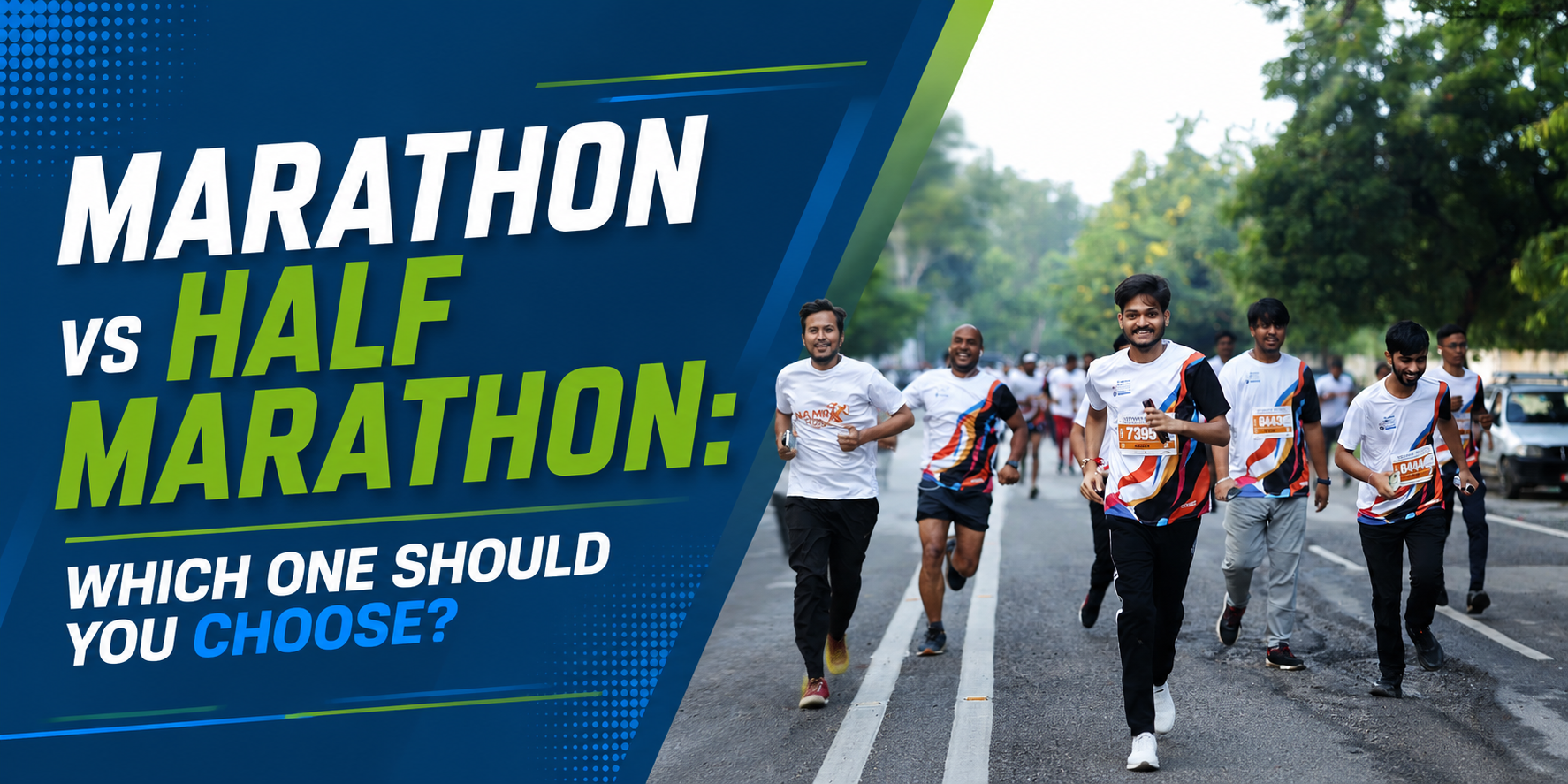
If you’re in the running bug and now you’re considering whether to do a full marathon or a half marathon, you’re not the only one. This is one of the most frequent queries runners ask when they start running, and there is no one correct answer. It will be dependent on your fitness level, your timeframe, and how much time you want to dedicate to training. When you’re deciding what distance is right for you and are looking at an event such as the Vedanta Zinc City Half Marathon, this guide will help you determine which distance is best.
1. Understanding the Distance Difference
There is a 42.195 km (26.2-mile) full marathon run and a 21.1 km (13.1-mile) half marathon run, which is half the distance. That may seem easy, but the demands placed on your body are quite different. The marathon should be a test of endurance, and you would need to have a solid mileage build-up to do one, whereas a half marathon is a great challenge without the commitment of having to be on your feet for months.
2. Training Time and Commitment
That’s really the only difference. Marathon training typically takes 16 to 20 weeks, and long runs of 20+ miles are typically done in the last few weeks before the race. It requires discipline in sleep, nutrition, and recovery and is not something you want to jump into without a running base.
A half marathon is, by contrast, much more manageable. Most training plans last 8-12 weeks, with the length of the runs reaching their maximum around 10-12 miles. It’s tough enough to get you fit and make you feel like you’re in good shape, but not so tough that it takes up your entire calendar. One of the reasons events like the Vedanta Zinc City Half Marathon have such a diverse range of participants in them is students, working professionals, and first-timers who are looking to get a true run without the extreme demands of a full marathon.
3. Which One Is Right for You?
While considering the decision, ask yourself a few honest questions:
Are you a beginner?
Begin with a half marathon. It is used to train for and prepare for future races.
Do you have 4+ months to train consistently?
It may be possible to do a full marathon.
What’s your injury history?
The higher the mileage, the higher the injury risk — half marathons are less stressful on your joints.
What’s your goal?
However, if it’s easy to get that race-day energy without burnout, then the half marathon will do the trick.
4. Do you have long runs on the weekend?
In half marathons, the investment of weekend time is not so much.
If you plan to ultimately run a full marathon, don’t worry, you can rewrite the path as a half marathon. In fact, the vast majority of marathon veterans suggest that you ease your way into it via half marathons first—it’s just a more rational training progression.
Conclusion
There is no “better” option between a marathon and a half marathon; it all depends on your individual fitness, time constraints, and desired goals. For novices to distance running, or people looking for a great challenge they can handle, a half marathon is the better place to begin. If you’ve got a solid running foundation and you want the ultimate endurance challenge, then a full marathon is for you.
If running is that first big step, then the Vedanta Zinc City Half Marathon is a great event to start—tough enough to be a pretty good accomplishment but not so tough that it requires you to compromise on your training. Register, set a plan, and do it the right way with the Vedanta Zinc City Half Marathon.