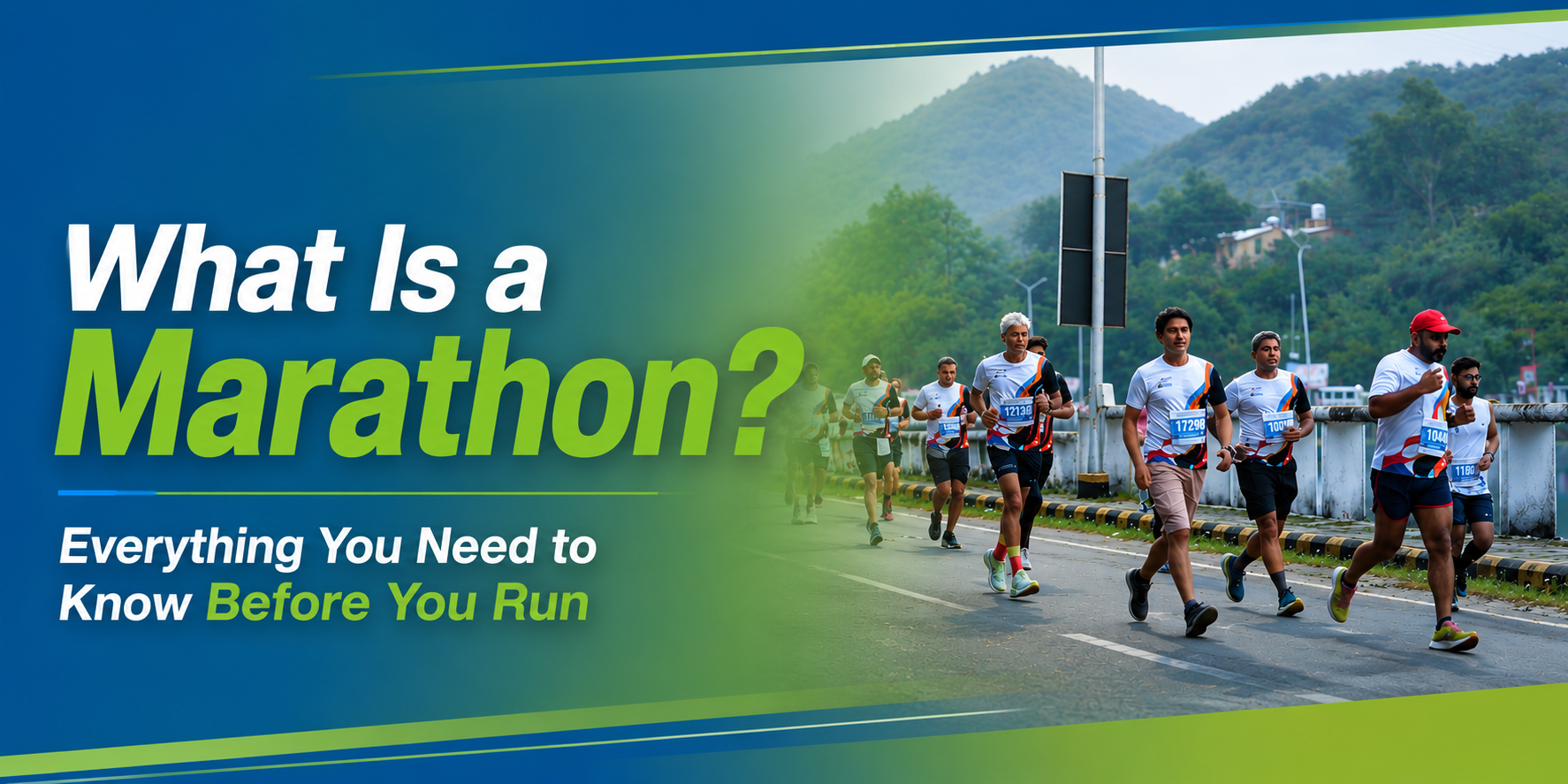
You’d like to run a marathon, so you have. Perhaps your friend convinced you, perhaps you’ve seen someone cross the finish line and thought, “I could do that,” or perhaps you’ve seen a race you’re interested in, such as the Vedanta Zinc City Half Marathon, and are wondering what you are getting yourself into. Regardless of what got you here, let’s first understand what a marathon is, how it differs from a half marathon, and what you should know before you lace up for your run.
1. The Basics: What Exactly Is a Marathon?
A marathon is a long-distance running race, and the official distance is 42.195 kilometers (26.2 miles). Its distance is based on a legend of a Greek messenger, Pheidippides, who was believed to have run from the town of Marathon to Athens to bring the news of a military victory. Even if this story isn’t completely accurate, the name became entrenched, and today there are marathons in almost every big city in the world.
As its name implies, a half marathon is half that distance, 21.1 kilometers (13.1 miles). It’s a favorite of many runners who wish to have the challenge and structure of a marathon with a bit less training or recovery time. For beginners who don’t know how to run for distance, half marathons may be a better first choice.
2. Full Marathon vs. Half Marathon
The one thing that matters is distance; all the other factors, like training load, nutrition, race-day pacing, and recovery, will differ based on which distance you are training for. There is a basic 16- to 20-week plan to follow for a full marathon and an 8- to 12-week plan for a half marathon. They both require consistency, but the half marathon is much easier to do for those who are just beginning, working professionals, or simply anyone getting their feet wet in the sport.
This is where community events come in. It is now one of the most popular Vedanta Zinc City Half Marathons, both for first-timers looking to challenge themselves and for those who have been running for some time and are looking for a tune-up run. Combines running a marathon with a distance that is truly attainable for many who are willing to work.
3. What You Need Before Race Day
Here are some of the important factors to consider before committing:
A training plan: don’t run haphazardly. Follow a plan that gradually increases mileage.
The right shoes fit appropriately: blisters and injuries frequently begin due to poorly fitting shoes.
Nutrition strategy: Practice fueling on long runs—not just race day.
Rest and recovery: An injury is more likely to occur due to overtraining than undertraining.
A realistic goal: The first race isn’t a race to set a personal record; it’s a race to finish well.
Changing a person’s mind and mental state is as important as their body’s. On race day, it’s important you’re ready to run, burning fat efficiently, and push through the discomfort that the long runs bring.
Conclusion
Running a marathon or half marathon isn’t a journey to the finish line; it’s a discipline, a patience, and a show of up for oneself, day after day, sometimes with a difficult workout. From the first 10K to the goal of 26.2 miles, there are lessons learned beyond split times and running shoes.
The Vedanta Zinc City Half Marathon is the ideal starting point if you’re searching for a race day that’s fun, has great vibes, and is an attainable distance. A good opportunity to try training, get to know other runners, and learn the true spirit of a marathon. Then sign up and make the Vedanta Zinc City Half Marathon the beginning of your running journey.